

Roof shingles that curl, crack, or split are more than a cosmetic concern. These changes can allow water to reach the underlayment, roof deck, insulation, and interior ceilings, especially during the repeated rain, snow, freezing, and thawing common in Clarence, NY.
The right response depends on the pattern, age, location, and severity of the damage. A few isolated defects may be repairable, while widespread deterioration usually indicates that the roofing system is nearing the end of its service life.
What do curling and cracking shingles look like?
Curling shingles turn upward or downward along their edges or corners. Cracked shingles may show narrow splits, larger breaks, or a dry, brittle surface with visible lines running through the material.
Common warning signs include:
- Shingle corners that no longer lie flat
- Edges that lift and catch the wind
- Long cracks along the center or lower portion of a shingle
- Blister-like surface damage or missing granules
- Dark streaks or exposed underlayment beneath damaged areas
- Loose shingle pieces in gutters or near downspouts
- Small leaks around ceilings, walls, or attic spaces
Curling can be subtle from the ground. A roof may appear generally intact while several shingles have already lost their ability to shed water properly.
Why do roof shingles curl?
Curling usually develops because shingles have lost flexibility, were installed under unfavorable conditions, or are being affected by ventilation and moisture problems.
Age is a common factor. Asphalt shingles gradually become less flexible as their oils and binders deteriorate. Once the material becomes stiff, temperature changes can cause the edges to lift or the surface to deform.
Poor attic ventilation can also contribute. Warm, moisture-laden air trapped beneath the roof can increase heat exposure from below, encourage condensation, and shorten the life of roofing materials. In a climate with cold winters and humid summers, the roof assembly experiences repeated changes in temperature and moisture.
Other possible causes include:
- Inadequate fastening or improperly placed nails
- Shingles installed over an uneven or deteriorated roof deck
- Multiple roofing layers that retain heat
- Manufacturing defects affecting a limited group of shingles
- Wind lifting that weakens adhesive strips
- Persistent moisture near valleys, eaves, or roof penetrations
Not every curled shingle points to the same underlying problem. If curling appears mainly on one roof slope, near a vent, or along an eave, the location may provide clues about the cause.
What causes shingles to crack?
Cracking occurs when roofing material becomes brittle or is repeatedly stressed by movement. Asphalt shingles expand in warm conditions and contract during cold weather. Over many seasons, this movement can produce surface fractures.
Cracks may also form when shingles are bent during installation, walked on improperly, or exposed to strong wind. Hail and falling branches can create direct impact damage, although impact marks may be easier to recognize than gradual aging.
A crack does not always cause an immediate leak. Water can pass beneath the shingle during wind-driven rain, then travel along the underlayment or roof deck before appearing indoors. This is why the location of an interior stain may not match the location of the damaged shingle.
Are curled or cracked shingles an emergency?
They are not always an emergency, but active water entry requires prompt attention. A small number of damaged shingles may not create immediate structural damage, yet exposed areas can worsen during rain, wind, snow, and freeze-thaw cycles.
More urgent warning signs include:
- Water dripping into the living space
- A ceiling stain that is growing or soft to the touch
- Exposed roof decking or underlayment
- Shingles missing after a wind event
- Large sections of lifted or cracked roofing
- Sagging areas on the roof or ceiling
- Wet insulation or a musty attic odor
If electrical fixtures are near a leak, avoid touching the fixture or nearby wiring. Water and electricity create a serious hazard. Entering a steep, icy, or visibly unstable roof is also unsafe.
Can a few damaged shingles be repaired?
A limited number of curled or cracked shingles may be replaceable if the surrounding roof is still in sound condition. A proper repair generally involves removing the damaged shingle without harming nearby materials, installing a compatible replacement, and securing it so wind cannot lift the edges.
Temporary measures, such as roofing cement or sealant, may reduce water entry for a short period, but they do not restore a brittle or failing shingle. Heavy patches can also interfere with drainage and make future repairs more difficult.
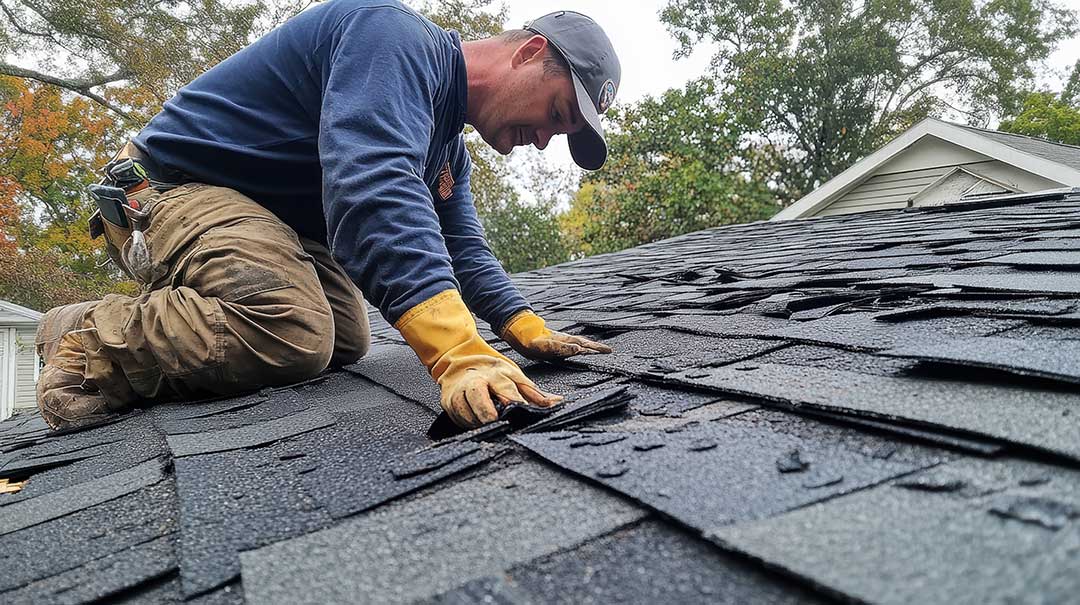
A repair is less likely to be a lasting solution when:
- Damage appears across multiple roof slopes
- Many shingles are curling, cracking, or losing granules
- The shingles are near or beyond their expected service period
- The roof deck feels soft or shows signs of moisture damage
- Previous repairs cover a large number of areas
- The same leak returns after patching
Matching replacement shingles can also be difficult on older roofs because color and surface texture change with age and weather exposure.
When does widespread damage mean replacement is needed?
Widespread curling and cracking generally indicate that the roof covering is no longer performing as a consistent water-shedding surface. Replacing only the most visibly damaged shingles may leave many other brittle shingles vulnerable to the next storm.
A roof evaluation should consider more than appearance. Useful inspection points include:
- The condition of flashing around chimneys, walls, vents, and skylights
- The roof valleys, where water flow is concentrated
- The eaves and rake edges, where wind can lift shingles
- The attic side of the roof deck
- Ventilation openings and signs of condensation
- The age and number of existing roofing layers
- Evidence of previous leaks or interior moisture
In Clarence, seasonal snow loads and freeze-thaw movement can make small weaknesses more noticeable over time. Ice buildup along cold eaves may also allow water to move beneath shingles if drainage and insulation conditions are poor.
What should homeowners avoid doing?
Walking across damaged shingles can break granules, worsen cracks, and loosen nearby materials. Roofing becomes especially fragile in cold weather, when asphalt shingles are less flexible.
Avoid painting over cracks, attaching objects directly through shingles, or using expanding foam as a substitute for roof repair. Indoor staining should not be covered before the moisture source is addressed, because concealed dampness can continue damaging drywall, insulation, framing, or paint.
Do not assume that a leak has been fixed simply because a ceiling stain dries. Water entry can stop temporarily and return with the next direction of wind or period of heavy rain.
How can further damage be reduced?
Routine observation helps identify problems before they become interior leaks. From the ground, residents can look for uneven shingle lines, missing granules, lifted corners, and loose pieces in gutters. Attic checks after major storms may reveal damp insulation, daylight through the roof deck, or water marks around penetrations.
Keeping gutters and downspouts clear helps water leave the roof efficiently. Trees should also be monitored so branches do not rub against the roof or accumulate heavy debris. Roof work should be postponed when surfaces are icy, wet, or otherwise hazardous.
Curling and cracking are best understood as symptoms rather than isolated defects. The most reliable response is to determine whether the problem is limited to a few shingles or reflects aging, ventilation trouble, moisture movement, installation issues, or broader roof deterioration.
