
Which roof shape is better for a home?
For most homes in Clarence, NY, a sloped roof is the more practical choice because it sheds rain, snow, and ice more effectively. Flat roofs can also perform well, but they require different drainage, insulation, maintenance, and detailing.
The right design depends on more than appearance. Roof pitch affects how water leaves the building, how snow loads are managed, how attic space is used, and how easily the roof can be inspected or repaired. Existing house design, additions, garages, porches, and local weather exposure also matter.
What is the difference between a flat roof and a sloped roof?
A sloped roof has an angled surface that directs water toward eaves, valleys, gutters, and downspouts. A flat roof is not perfectly level; it usually has a slight slope, often created with tapered insulation or structural framing, so water can move toward drains or roof edges.
Sloped roofs
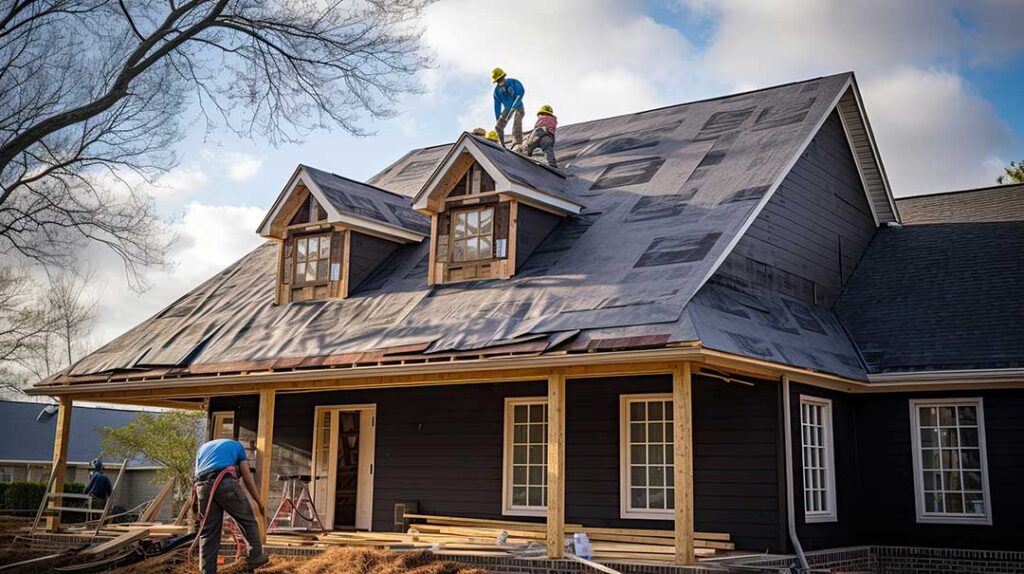
Sloped roofs are commonly covered with asphalt shingles, metal panels, tile, or other materials designed for angled surfaces. Their basic advantage is gravity. Water and melting snow generally move off the roof without depending entirely on internal drains or carefully placed scuppers.
A sloped roof may also include:
- An attic or partially enclosed roof cavity
- Eaves that help protect siding and foundation areas
- Ridge, soffit, or gable ventilation
- Roof valleys where multiple slopes meet
- Larger surfaces that are visible from the ground
Flat roofs
Flat roofs are often covered with membrane systems, modified bitumen, built-up roofing, or other low-slope materials. They are common on contemporary homes, additions, porches, garages, and commercial-style structures.
Because water moves more slowly across a low-slope roof, drainage details are especially important. The system may use interior drains, scuppers, gutters, tapered insulation, or a combination of these features.
Why does the local climate matter?
Snow, freeze-thaw cycles, wind, and heavy rain all influence roof performance in the Clarence area. A roof must handle not only the weight of accumulated snow but also repeated periods of melting and refreezing.
Sloped roofs usually remove precipitation more naturally, although snow can remain on low-pitch sections, behind roof features, or along areas where drifting occurs. Ice dams may form when heat escapes into a roof space and melts snow unevenly. Gutters can also become blocked by ice or fallen leaves, preventing proper drainage.
Flat roofs face a different set of challenges:
- Meltwater may remain on the surface if drains or drainage paths are blocked.
- Refreezing water can place stress on seams and flashing.
- Snow accumulation may be uneven because of wind or nearby roof sections.
- Ponding water can accelerate membrane wear.
- Drainage components must remain accessible and functional.
Neither roof type is automatically maintenance-free in a snowy climate. Proper design, ventilation, insulation, drainage, and regular observation all affect service life.
Is a flat roof a bad choice for a house?
No. A flat roof can be a sound choice if it is properly designed for drainage, snow loads, insulation, and membrane installation. Problems often arise when a roof is treated as merely a level surface rather than a complete water-management system.
A flat roof may suit a home with a modern architectural style, a one-story addition, or a structure where a low profile is desirable. It can also provide a cleaner roofline and make rooftop equipment or accessible outdoor space possible in some designs, subject to structural and safety requirements.
The disadvantages include greater sensitivity to drainage problems and more dependence on seams, flashing, penetrations, and surface detailing. A small defect near a drain or wall intersection can allow water to travel beneath the membrane before interior staining becomes visible.
Are sloped roofs always more durable?
Not necessarily. A well-built sloped roof may shed water efficiently, but durability depends on the material, installation quality, ventilation, flashing, structural support, and maintenance.
Sloped roofs have their own vulnerable areas. Valleys, chimneys, skylights, dormers, wall intersections, and roof-to-porch connections can collect water or snow. A steep roof may also be harder to inspect safely from the ground, which can allow minor problems to go unnoticed.
A roof with a moderate slope and straightforward design may be easier to maintain than a complicated roof with many valleys and transitions. Roof geometry often matters as much as the basic choice between flat and sloped.
Which roof is easier to maintain?
A flat roof is often easier to walk on for visual inspection, but that does not necessarily make it easier to maintain. Its surface needs careful checking for ponding water, membrane damage, open seams, blocked drains, and deteriorated flashing.
A sloped roof may be more difficult to access safely, but its drainage is usually more obvious. Residents can often observe missing shingles, sagging gutters, damaged metal, or exposed flashing from ground level.
Routine observations should include:
- Water stains or bubbling paint on ceilings
- Sagging roof areas or interior walls
- Missing, cracked, or lifted roofing materials
- Granules or damaged pieces in gutters
- Ice buildup that blocks drainage
- Ponding water that remains after a storm
- Flashing that has separated from masonry or siding
- Moss, algae, or debris holding moisture against the roof
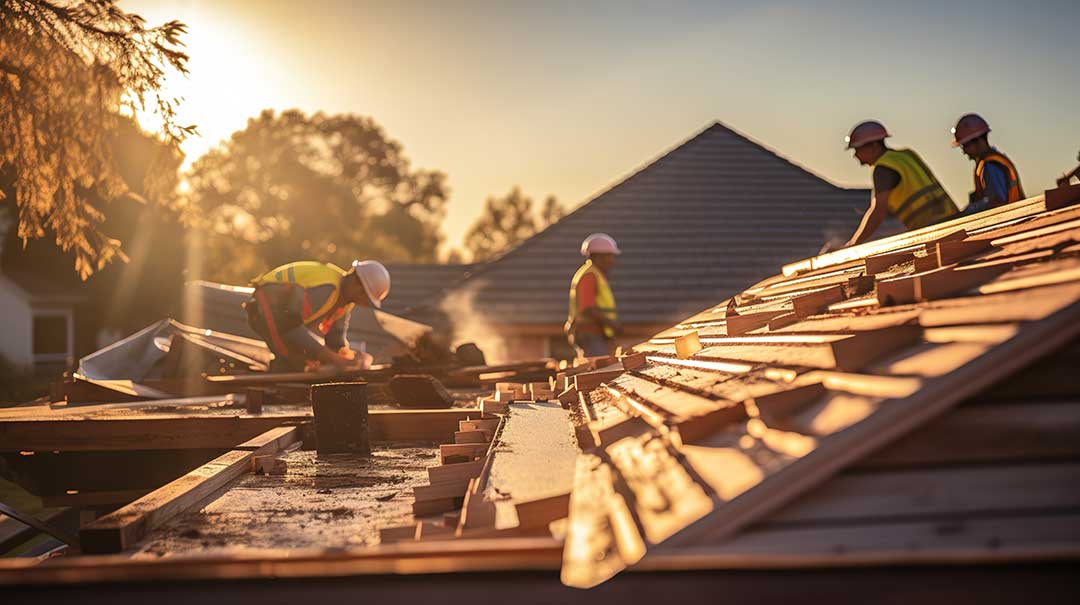
Roof access can be hazardous, especially during freezing weather. Inspection from the ground is reasonable for basic observation, but steep surfaces, icy conditions, structural sagging, or suspected leaks may require a qualified inspection for safety.
How do cost and energy efficiency compare?
The cost difference between roof types cannot be determined from shape alone. A simple sloped roof may be economical, while a complicated design with multiple valleys, dormers, and penetrations can be expensive. A flat roof may have a straightforward structure but require specialized membrane materials, tapered insulation, or custom drainage work.
Energy performance depends mainly on insulation and air control rather than roof shape. A sloped roof with an attic can provide useful space for insulation and ventilation, but only if air leaks and ventilation paths are properly managed. A flat roof typically relies on insulation placed within a compact roof assembly, where detailing must prevent condensation and thermal bridging.
In either design, the condition of the ceiling, attic, roof deck, insulation, and ventilation system affects comfort and heating demand. A roof replacement is an opportunity to correct these issues, but changing from one roof type to another may require structural changes and approval.
Can a flat roof be changed to a sloped roof?
Sometimes, but it is not a simple covering replacement. Converting a flat roof to a sloped roof may affect structural loads, wall heights, attic ventilation, exterior appearance, drainage, and connections to neighboring roof sections.
The change may also affect windows, siding, gutters, overhangs, and the way snow slides or accumulates. Before considering such a modification, the building’s structure and applicable requirements should be evaluated. A low-slope roof may be better improved through insulation, drainage correction, membrane replacement, or flashing repairs rather than converted entirely.
What should Clarence homeowners consider first?
Start with the building’s existing design and the way the roof currently handles water and snow. A roof that is structurally sound and properly drained may not benefit from a change in shape.
Useful questions include:
- Does water drain promptly after rain?
- Are there signs of ponding, leakage, or interior moisture?
- Does the roof support the expected snow load?
- Is the attic or roof assembly adequately insulated and ventilated?
- Are gutters, downspouts, drains, and scuppers clear?
- How many valleys, wall transitions, skylights, or penetrations are present?
- Would a different roof shape improve the building, or simply add complexity?
For many traditional houses, a properly maintained sloped roof remains the practical option. For additions and modern structures, a well-designed flat or low-slope roof may be entirely appropriate. The best choice is the one that matches the structure, manages local weather effectively, and can be inspected and maintained over time.
