
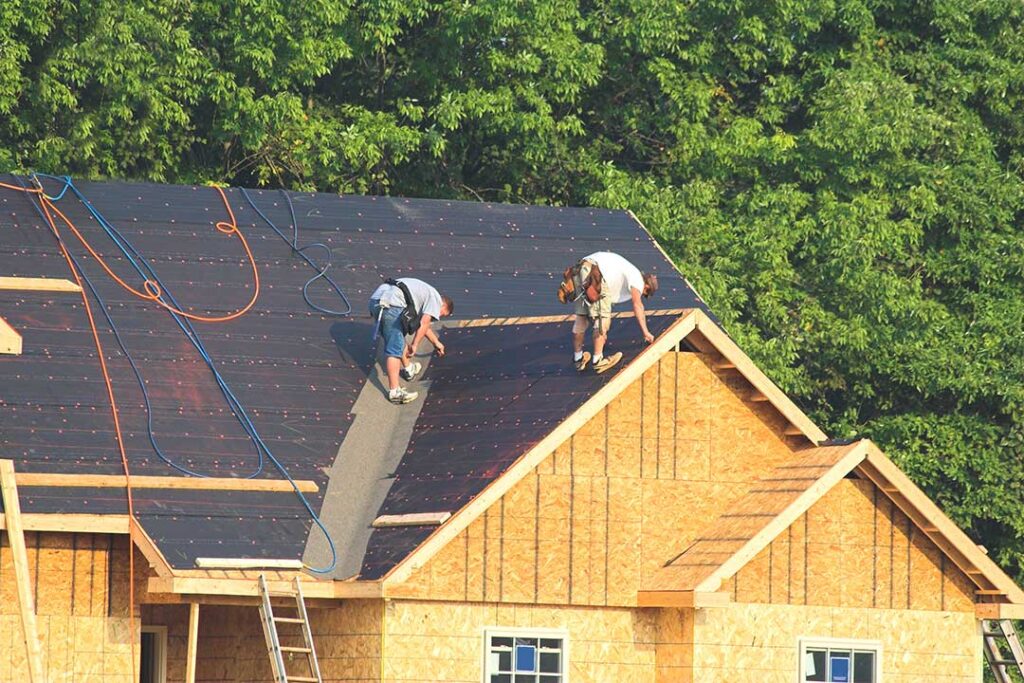
Roofing problems are often surrounded by assumptions about age, appearance, weather, and repairs. Some common beliefs are harmless, but others can lead to missed maintenance, unnecessary expense, or unsafe decisions.
For households in Clarence, NY, roofing questions are especially relevant because roofs must handle snow, ice, freeze-thaw cycles, wind, heavy rain, and occasional summer heat. Understanding what a roof can—and cannot—tell you helps homeowners make better decisions.
Does a roof need replacement as soon as it reaches a certain age?
No. Roof age is a useful warning sign, but it does not determine condition by itself.
Many asphalt-shingle roofs are commonly discussed in terms of a 20- to 30-year service life. That range is not a guarantee. Installation quality, ventilation, sun exposure, attic moisture, storm damage, and maintenance history can shorten or extend useful life.
A roof that is 15 years old may be performing well, while a newer roof may develop problems because of poor drainage, improper installation, or severe weather. Instead of relying only on age, look for:
- Repeated leaks or water stains
- Missing, cracked, curled, or loose shingles
- Granules collecting in gutters or downspouts
- Sagging areas along the roofline
- Damaged flashing around chimneys, vents, and roof edges
- Daylight visible through the attic roof deck
Age becomes more significant when several warning signs appear at the same time.
Can a roof be judged by looking at it from the ground?
Only partially. A ground-level view can reveal obvious damage, but it cannot show every roofing problem.
Small flashing gaps, deteriorated sealant, weak areas around penetrations, and moisture damage beneath the shingles may not be visible from the yard. Snow can also conceal damaged shingles or roof edges during winter.
A visual check from the ground is still useful. Binoculars can help identify missing shingles, lifted edges, exposed underlayment, or unusual sagging without requiring anyone to climb onto the roof. Roof access becomes more hazardous during icy, wet, windy, or snowy conditions, so climbing should not be treated as routine household maintenance.
Does a small leak mean only a small repair is needed?
Not necessarily. The visible drip point inside a home may be far from the actual entry point on the roof.
Water can travel along roof decking, rafters, insulation, or other building materials before appearing as a ceiling stain or wall mark. A small stain may reflect a minor flashing issue, but it can also indicate repeated moisture exposure that has affected wood, insulation, paint, or drywall.
A leak that stops after rain does not mean the underlying problem has disappeared. Temporary drying can hide continued deterioration. Stains that grow, return, or develop a musty odor deserve attention, particularly before winter weather makes access and repairs more difficult.
Do new shingles make roof ventilation unnecessary?
No. Roofing materials and attic ventilation perform different functions.
Shingles form the weather-resistant outer layer. Ventilation helps manage heat and moisture in the attic. During cold weather, warm indoor air can migrate into the attic and condense on colder surfaces. During summer, trapped heat can raise attic temperatures and contribute to material stress.
Effective ventilation generally depends on balanced air movement rather than simply adding more vents. Intake openings near the lower roof edges need to work with exhaust openings higher on the roof. Blocked insulation pathways, poorly placed vents, or excessive exhaust ventilation can reduce performance.
Ventilation will not correct every roofing problem, but ignoring attic airflow can contribute to premature deterioration and moisture damage.
Does more insulation solve every attic problem?
No. Insulation can improve energy performance, but it does not replace air sealing, ventilation, drainage, or roof repairs.
If warm, moist indoor air reaches the attic through gaps around light fixtures, plumbing penetrations, wiring, or access panels, adding insulation over those areas may conceal the problem rather than solve it. Moisture can still collect against cold surfaces.
A properly functioning attic should be evaluated as a system that includes:
- Air sealing between the living space and attic
- Adequate insulation depth and coverage
- Clear ventilation pathways
- Properly functioning roof drainage
- No active roof or flashing leaks

In older homes, improvements may need to account for previous renovations, uneven insulation, and changes to bathroom or kitchen ventilation.
Is ice damming caused only by too much snow?
No. Ice dams usually form because some parts of the roof are warm enough to melt snow while lower roof edges remain cold enough to refreeze the runoff.
Snow depth can contribute, but the pattern is also affected by attic heat loss, roof design, insulation, ventilation, outdoor temperature, and the position of gutters and eaves. A thick snow layer may make the problem more visible without being the root cause.
Ice dams can force water beneath shingles and into roof edges, ceilings, or wall assemblies. Removing snow from a roof with household tools can damage shingles and create a fall hazard. Prevention typically involves addressing heat loss and airflow before winter, not simply reacting after ice has formed.
Do gutters protect the roof, or are they mainly for the foundation?
Gutters help protect both the foundation and parts of the roofing system.
A functioning gutter system directs water away from walls, doors, windows, landscaping, and foundation areas. It also helps control runoff at the roof edge. Clogged or poorly aligned gutters can allow water to back up beneath roof-edge materials or saturate fascia and soffit components.
Leaves are not the only concern. In this region, freeze-thaw cycles can loosen joints, pull fasteners away from the fascia, and cause ice to form inside downspouts. Gutters should be checked for sagging, overflow marks, separated seams, and water spilling behind them during rain.
Can a roof be repaired during winter?
Sometimes, but winter conditions can limit what can be done safely and effectively.
Cold temperatures can make asphalt shingles less flexible and reduce the reliability of factory-applied adhesive strips. Snow, ice, wind, and shorter daylight also create safety concerns. Emergency measures may be necessary when active water is entering the home, but temporary protection is not always a permanent repair.
Planning inspections and non-urgent maintenance during milder weather can make work safer and improve material performance. After a major storm, a cautious ground-level inspection is preferable to climbing onto an icy roof.
Are roof leaks the only sign of roofing failure?
No. A roof can have meaningful damage before water reaches the interior.
Other signs include increased granules in downspouts, damp attic insulation, rusted nails, darkened wood, deteriorated flashing, cracked pipe boots, and shingles that are losing their protective surface. Strong wind can also loosen roofing components without creating an immediate leak.
Some problems become visible only during specific weather. Wind may expose lifted shingles, while heavy rain reveals drainage weaknesses. A roof that has not leaked yet should not automatically be considered problem-free.
Does every roof problem require complete replacement?
No. Many roofing problems are localized and may be repairable.
A damaged flashing section, isolated missing shingle, clogged drainage path, or failed seal around a roof penetration may not justify replacing the entire roof. Full replacement becomes more likely when damage is widespread, the roof covering is near the end of its practical service life, or repairs would not restore dependable weather protection.
The right decision depends on the extent of damage, the condition of the underlying roof deck, the history of previous repairs, and the likelihood of recurring problems. Treating every issue as either insignificant or catastrophic can lead to poor decisions.
For local residents, the most reliable approach is to separate visible symptoms from underlying causes. Roof age, winter weather, attic conditions, drainage, and installation quality all matter—but none tells the whole story alone.
