
Why does sun exposure matter for a roof?
Sunlight gradually changes roofing materials through heat, ultraviolet radiation, and repeated daily expansion and contraction. In Clarence, NY, these effects are often combined with snow, ice, wind, and seasonal temperature swings, so roof aging rarely comes from sunlight alone.
A roof may look sound from the ground while its surface is already becoming less flexible, less protective, or more vulnerable to moisture. The rate of change depends on the roofing material, roof slope, color, ventilation, nearby shade, and the amount of direct sunlight received each day.
How does ultraviolet radiation damage roofing materials?
Ultraviolet, or UV, radiation breaks down the chemical bonds in many roofing materials. On asphalt shingles, this process can gradually dry and weaken the protective surface, causing the granules that shield the shingle from weather to loosen.
Common signs of long-term UV exposure include:
- Faded or uneven shingle color
- Bare patches where protective granules have worn away
- Brittle or cracked shingle edges
- Curling, splitting, or loss of flexibility
- Granules collecting in gutters or at downspout outlets
Granule loss is not always caused by sunlight. Aging, hail, foot traffic, manufacturing differences, and poor drainage can also contribute. However, direct and prolonged sun exposure can make the shingle surface more vulnerable to these other stresses.
UV radiation can affect other materials as well. Some roof coatings, membranes, sealants, plastics, and painted metal surfaces may fade, harden, chalk, or lose elasticity over time. A material that still sheds water may nevertheless have less remaining service life than its appearance suggests.
Does a dark roof get hotter than a light-colored roof?
Usually, yes. Dark surfaces absorb more solar energy, while lighter surfaces reflect more of it. The temperature of a roof can rise substantially above the surrounding air temperature during clear summer weather.
Heat does not automatically mean a roof is failing. Roofing materials are designed to tolerate normal outdoor temperatures. The concern is repeated heating and cooling. As the roof warms, materials expand; as evening temperatures fall, they contract. Over many years, this movement can contribute to:
- Shingle distortion
- Loosened fasteners
- Stressed flashing
- Opened seams or joints
- Drying and cracking of sealants
- Increased movement around roof penetrations
A dark roof may also transfer more heat into the attic. That can raise cooling demand and make upper rooms less comfortable, especially if the attic lacks adequate insulation and ventilation.
Can sun exposure cause shingles to curl or crack?
Sunlight can contribute to curling and cracking, but it is rarely the only cause. Shingles may curl because of age, moisture entering the shingle layers, inadequate fastening, improper installation, or poor attic ventilation. Prolonged heat and UV exposure can accelerate the loss of flexibility that makes these problems more likely.
Curling may appear along the edges or corners of individual shingles. Cracking can occur in straight lines, irregular patterns, or around areas that experience more movement. A few damaged shingles do not necessarily indicate widespread roof failure, but they should not be ignored because raised or cracked areas can allow wind and water to reach the layers below.
In a region with winter snow and strong seasonal winds, a weakened shingle may be more likely to lift or break during a later storm. Sun damage can therefore create a vulnerability that becomes obvious only after another weather event.
Why are some roof areas more sun-damaged than others?
Sun exposure is often uneven. A south-facing roof plane generally receives more direct sunlight over the course of a year, while roof sections shaded by mature trees or nearby structures may weather more slowly. West-facing surfaces can receive intense afternoon heat, which may be especially noticeable during summer.
Uneven aging can also result from:
- Different roof slopes
- Dormers, chimneys, and other roof projections
- Partial shade from trees
- Snow remaining longer on shaded sections
- Different roof materials installed at different times
- Nearby buildings or additions that alter airflow and sunlight
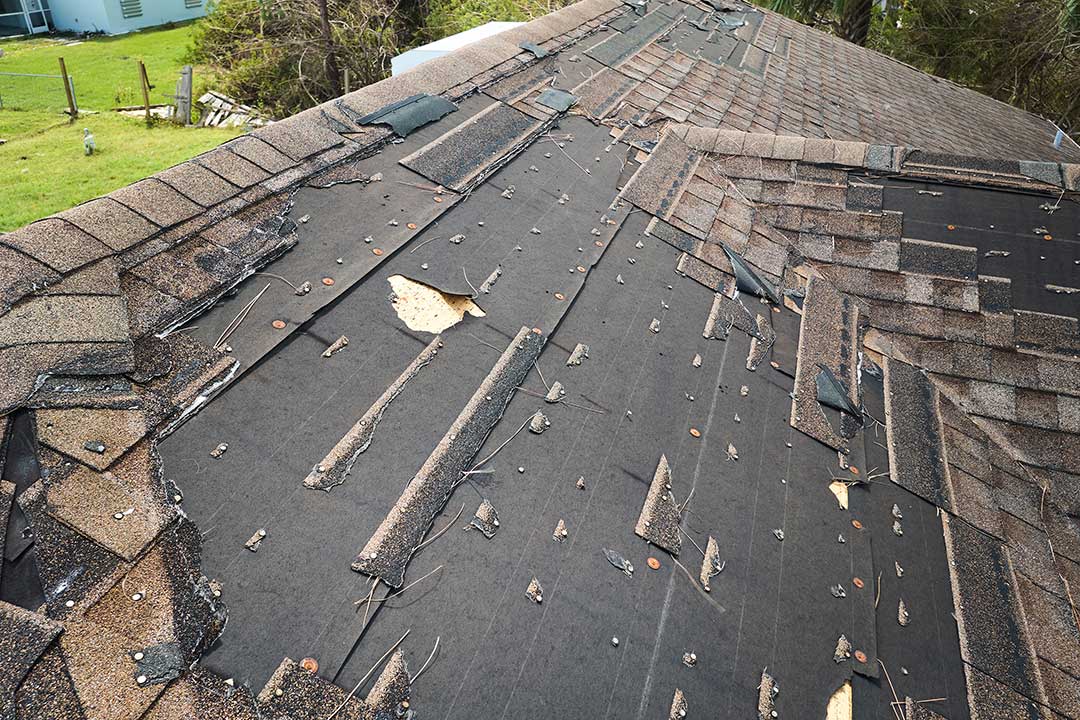
Color differences do not always mean one section is defective. They may reflect normal differences in weathering. However, a sharp contrast accompanied by cracking, exposed underlayment, or missing granules deserves closer attention.
Does shade protect a roof?
Shade can reduce direct UV exposure and surface temperatures, but permanent shade is not always beneficial. Trees and structures can keep a roof cooler while also limiting drying after rain or snow. Overhanging branches may scrape the surface, drop debris, and encourage moss or algae growth in damp areas.
Leaves and small branches can obstruct gutters and valleys. If water cannot drain properly, moisture may remain against roofing materials and wood components. Tree shade can also make it harder to spot early damage during a visual inspection.
The practical question is not whether shade is always good or bad. It is whether the roof remains dry, clear of debris, and adequately exposed to airflow. A shaded roof may age differently from a sunny roof, but it still requires observation.
How does sunlight affect attic temperature and roof ventilation?
Sun-heated roofing materials can raise attic temperatures, particularly when the attic floor has insufficient insulation or air leaks from the living space. Excess heat may increase indoor discomfort and cooling use, but ventilation alone cannot correct every attic problem.
A sound attic system typically depends on several parts working together:
- Adequate insulation at the attic floor
- Sealed openings around light fixtures, ducts, wiring, and plumbing
- Proper intake airflow near the lower roof edges
- Exhaust airflow near the roof peak or upper roof area
- No blocked vents or compressed insulation at ventilation openings
Ventilation should not be used to hide roof leaks or replace needed insulation. Poorly balanced airflow can also reduce its effectiveness. Roof temperature is influenced by the roof color, insulation, air sealing, ventilation, weather, and interior moisture levels.
What should Clarence residents look for during a roof check?
A basic visual review can identify changes without walking on the roof. From the ground or a safe window, look for missing shingles, uneven surfaces, dark streaks, exposed underlayment, damaged flashing, or areas that appear substantially different from the rest of the roof.
After strong sun or severe weather, check accessible gutters for an unusual increase in granules. Inside the attic, look for damp insulation, water staining, musty odors, or daylight showing through areas that should be sealed.
Roof access can be hazardous, particularly when shingles are brittle, steep, wet, icy, or covered with debris. Walking on an older roof can also dislodge granules and cause damage that was not previously present. Conditions involving exposed wood, active leaks, loose roofing near an edge, or damage around electrical equipment require appropriate safety precautions and may justify an in-person assessment.
How can sunlight-related roof aging be reduced?
Sun exposure cannot be eliminated, but its effects can be managed through sound design and routine observation. Useful measures include keeping gutters and valleys clear, trimming branches that scrape or heavily cover the roof, maintaining attic insulation and air sealing, and checking flashing after major weather events.
When roofing is replaced, material selection should consider more than appearance. Reflective properties, durability, ventilation design, slope, snow exposure, and compatibility with existing roof components all affect long-term performance.
The most reliable approach is to treat sun exposure as one part of the roof’s total environment. In Clarence, seasonal snow, freeze-thaw cycles, wind, moisture, and summer heat interact over many years. Recognizing those combined effects makes it easier to distinguish normal weathering from conditions that need prompt attention.
